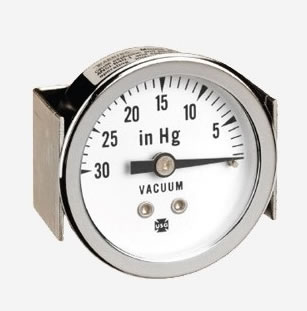
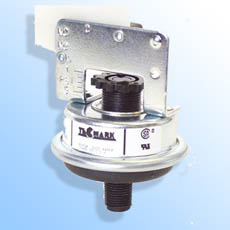
Oil pressure gauges are tools for measuring oil pressure inside a closed container. All objects have forces acting against them when the object comes into contact with another. Therefore, the oil pressure gauge serves as a gauge for the engine’s health and as an early warning system, alerting any issues so that they may be looked into before an expensive breakdown occurs. Read More…
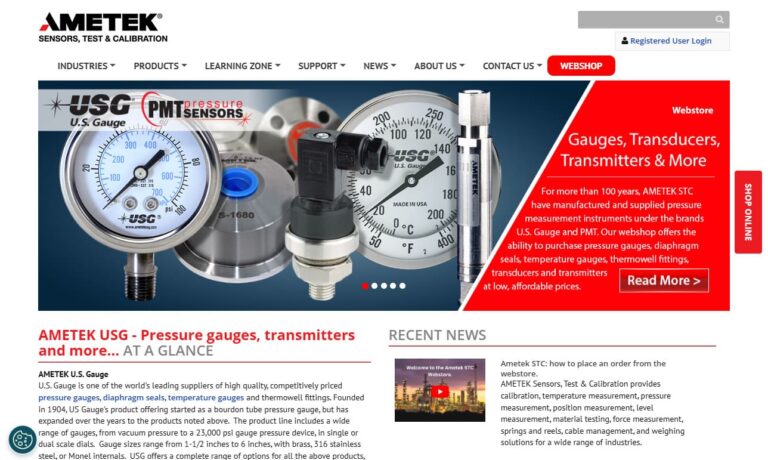
At AMETEK® U.S. Gauge, PMT Products, we take pride in designing and manufacturing precision pressure gauges that set the standard for performance and reliability. We specialize in creating instruments that deliver accurate readings under the most demanding industrial conditions, ensuring dependable operation across a wide range of applications.
We take pride in offering a wide range of pressure gauges designed to deliver precision, reliability, and durability across industrial applications. At Emerson, we engineer our gauges to meet the demands of challenging environments where accurate pressure monitoring is critical to performance and safety.

Since 1946, WIKA has continuously advanced instrumentation for pressure, temperature, level, flow, and force measurement. A global leader in lean manufacturing, WIKA has manufacturing locations around the globe, which enables flexibility and the ability to meet high delivery demands.
Ashcroft’s extensive product line is the benchmark in pressure and temperature measurement, including pressure gauges. Used globally in the most demanding environments, our instruments are known under the names Ashcroft®, Heise®, Willy® and Weksler® and offer multi-industry versatility. As a leader in technology and innovation, we design new products for current and emerging market...

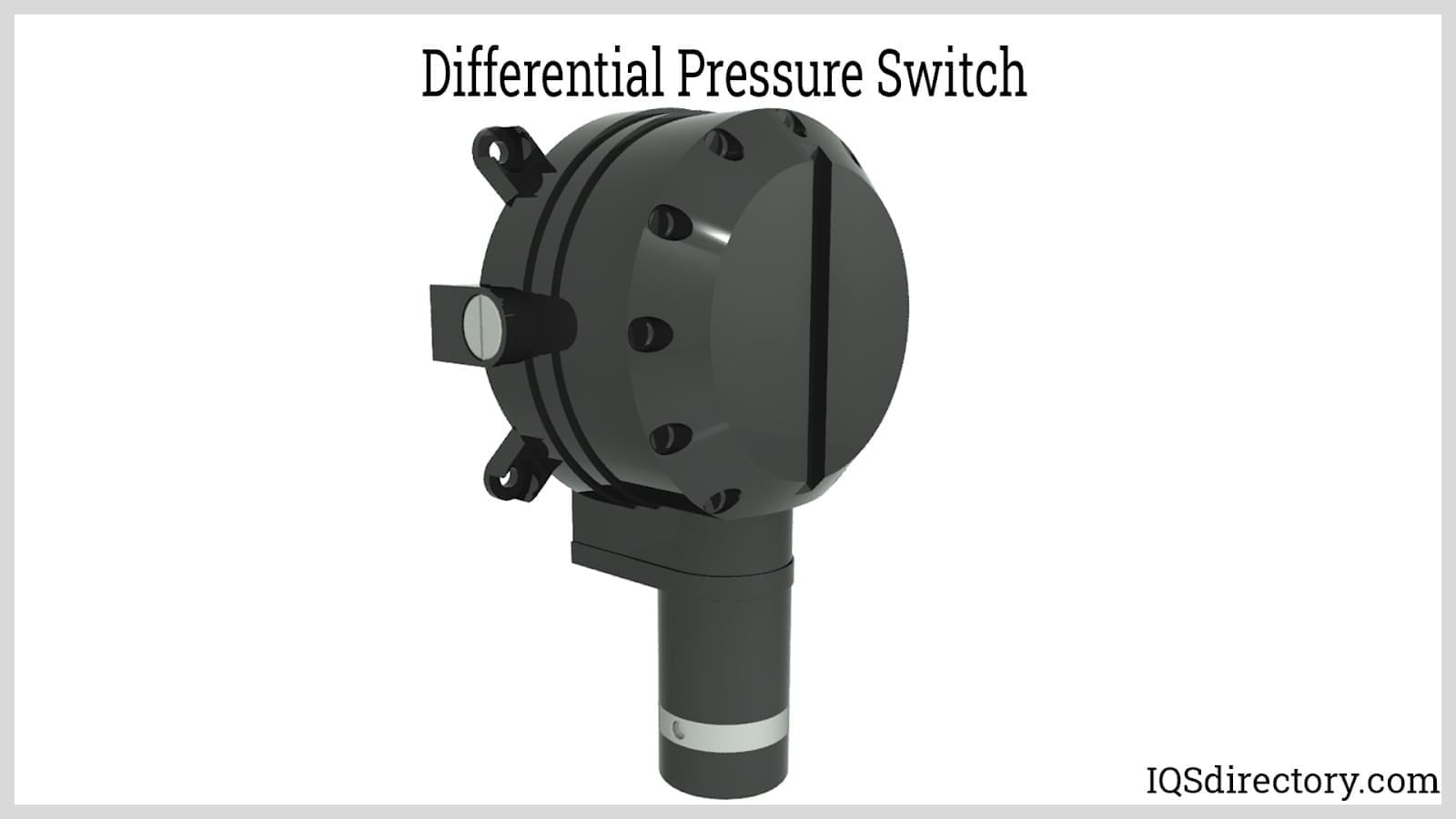
Endress + Hauser makes highly accurate equipment with electric output signals, which function as digital process pressure and differential pressure gauges. Our differential pressure gauges measure dusts, gases, liquids and vapors. Ceraphant is our pressure switch used in absolute and pressure gauges.





More Oil Pressure Gauge Manufacturers

Oil gauges have been in use for some time, and oil pressure gauges have undergone improvements to meet the demands of new applications. Oil pressure gauges are now essential because of their implementation, and more and more oil pressure systems are coming into operation.
Operation of Oil Pressure Gauges
The two main types of oil pressure gauges can be either electric or mechanical. Most modern cars have an electric oil pressure gauge connected to the wires behind the dashboard, providing the power for it. The gauge keeps track of the oil pressure in a major oilway close to the pump and filter. There is an electrical tapping inside the engine block for this purpose; it is connected with an oil pipe take-off or sensor for electric gauges and is screwed for mechanical gauges.
The oil pressure gauge is usually used in cars regardless of whether the car has an oil pressure gauge or not. The sensor for this oil warning is fitted into the union as well as a T-piece. Mechanical gauges operate by practically pushing the needle around the dial while the engine is running. Conversely, electric gauges run by employing the sensor fitted into the engine block to create a variable resistance that alters the amount of current flowing through the circuit that houses the gauge and sensor.
Mechanical Oil Pressure Gauges
Small-bore 3mm diameter pipes made of copper or plastic transport oil to the gauge from one of the tappings in the engine's oilway. The pipe is positioned far from potential hazards to prevent engine oil from flowing into a vehicle engine if it were to become damaged.

The pipe attaches to the stub on the rear of the gauge through a knurled connector after passing through a grommet hole in the bulkhead in the passenger compartment. A flexible coiled tube inside the gauge is called a bulb, and its open end is rigidly attached to the gauge's body. The bottom end of a needle, fixed on a pivot, is connected to the opposite end of the bulb. This bulb is closed by a thin linkage.
Oil is supplied to the bulb from the supply line at a pressure that is extremely close to that at which it exited the engine. The calibrated gauge scale's needle is moved around as the bulb tries to straighten itself under pressure. The needle moves more when there is more pressure.
Advantages of Mechanical Oil Pressure Gauges
- Available in various ranges
- Offers excellent sensitivities
- Simple construction
- Low cost
Electrical Oil Pressure Gauges
In a car engine, one of the several cables or printed tracks below the dashboard is utilized to draw current for the gauge, which is powered by a fused power source. The current creates a magnetic field, which causes the needle to move around the calibrated scale on the gauge as it travels through a wire-wound coil positioned within or around the needle's pivot. Depending on how many current runs through the gauge corresponds to how the needle on the scale travels and the reading it provides. The gauge's return wire, which is earthed to the engine block via the sensor, has a certain resistance for this to work.
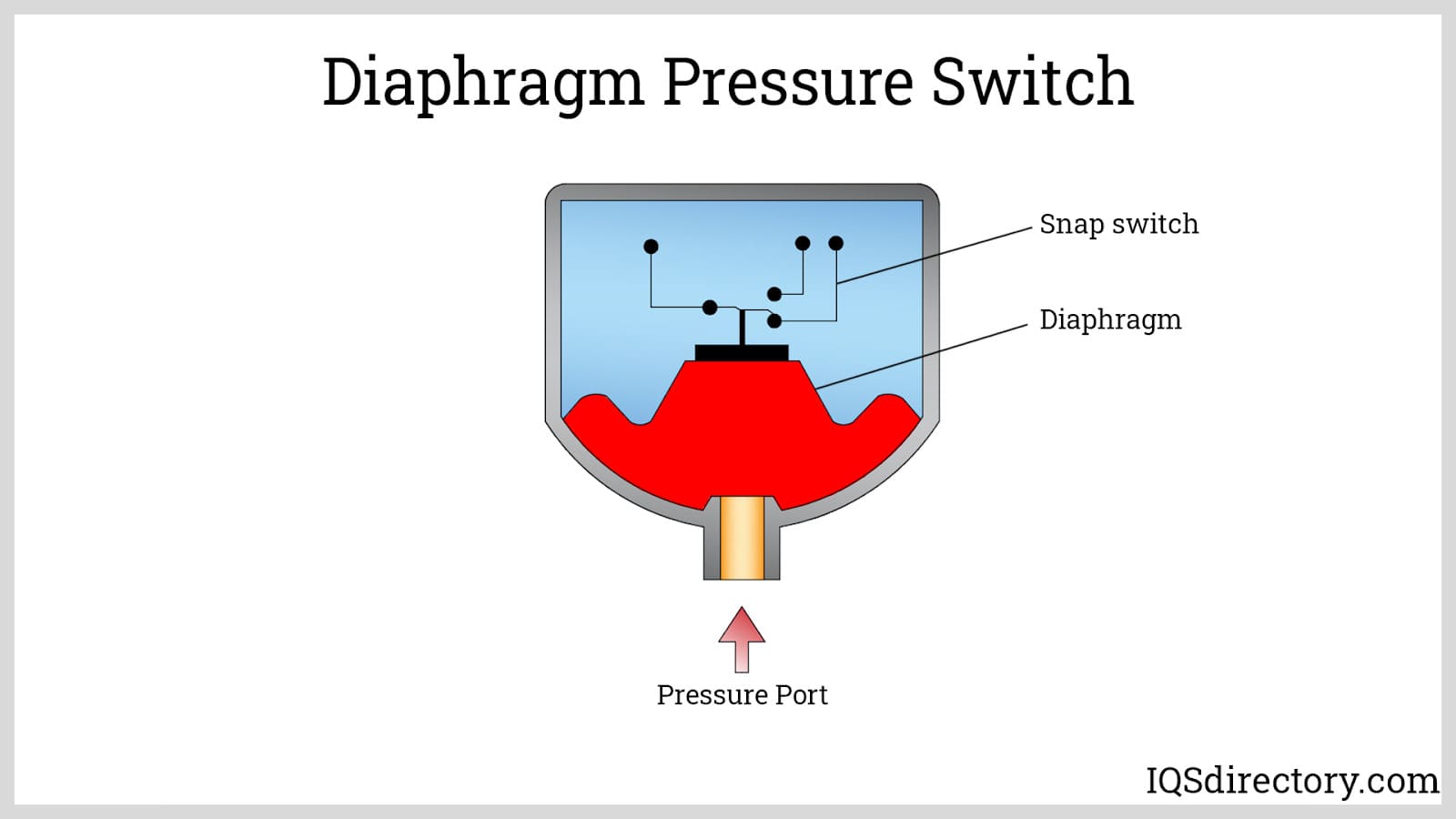
The oil pressure affects the sensor's resistance. Oil is introduced into the sensor's screwed-in end and is pushed against a diaphragm by the engine block. The sensor diaphragm moves a wiper, which moves a known-resistance blade up or down. This blade is attached to the gauge's return wire. The further the wiper goes down the resistance blade, the more the diaphragm moves when under pressure. To move the gauge's needle following the sensor's resistance variation caused by oil pressure.

Advantages of Electrical Oil Pressure Gauges
- Easier to integrate
- Less bulky
- Easier to route the wire connection
Oil Pressure Gauge Applications
An advantage of an oil pressure gauge is that it performs similarly in all applications. However, some oil pressure gauges will provide more specific information than others.
Some oil pressure gauge applications include:
- Vehicle
- Marine vessel
- Equipment that has engines that use oil
- Assessing engine performance in some commercial cars
- Recreational boats
- Industrial equipment
Choosing the Proper Oil Pressure Gauge Supplier
To make sure you have the most constructive outcome when purchasing Oil Pressure Gauges from an Oil Pressure Gauge Supplier, it is important to compare at least 5 Suppliers using our list of Oil Pressure Gauge companies. Each Oil Pressure Gauge Manufacturer has a business profile page that highlights their areas of experience and capabilities and a contact form to directly communicate with the manufacturer for more information or request a quote. Review each Oil Pressure Gauge company website using our proprietary website previewer to get an idea of what each business specializes in, and then use our simple RFQ form to contact multiple Oil Pressure Gauge companies with the same form.